


North America
Register for free with StrategicRISK
Unlock full access to award-winning journalism tailored for senior risk professionals. StrategicRISK goes beyond the headlines, offering in-depth analysis, exclusive case studies, and global insights designed to help you anticipate threats, shape strategy, and lead with confidence.
If you are already registered, please sign-in for access.

AI adoption outpaces governance as businesses struggle to close training gaps
Riskonnect research reveals significant gaps in AI training and oversight, even as organisations increasingly turn to the technology to manage growing operational pressures.
Why unverified AI is becoming a compliance liability
AI is helping compliance teams respond faster to regulatory change, but new research from Enhesa suggests that businesses are struggling to manage the risks created by the technology itself.
SR Q3 2026: When risks collide
The threats facing businesses may be familiar, but the way they are concentrating and cascading feels different. As one problem becomes five, risk managers need to understand where the weak points lie, and make sure their work changes what happens next.

Supply chain disruption pushes risk managers to demand more from marine insurers
Corporate risk managers want marine insurers to move beyond traditional cargo cover and play a broader role in building supply chain resilience as geopolitical disruption, sanctions, cyber threats and longer transit routes intensify.

Case study: How wildfire risk spreads through infrastructure and supply chains
A new assessment of Canada’s Boreal Forest shows how wildfire, drought, water stress and permafrost thaw can disrupt businesses well beyond the areas directly affected.

Case study: How sanctions pressure exposed gaps in Citibank’s controls
A £4.7m fine against Citibank’s London branch exposes how sanctions controls came under strain as alert volumes surged following Russia’s invasion of Ukraine.

Rare earth dispute exposes compliance collision in global supply chains
Chinese countermeasures against a major supply-chain due diligence body are beginning to collide with rare-earth trade, creating new problems for businesses trying to meet different regulatory requirements across global supply chains.

The convective storm surge and what risk managers can still control
Severe convective storm losses were below trend in the first half of 2026, but elevated storm activity shows why businesses cannot afford to ease off on resilience.
Low water is becoming a chronic supply chain risk for organisations reliant on inland waterways
Inland waterways are central to lower-carbon freight strategies, but recurring drought is exposing the risks of supply chains built around historically reliable river systems.

Climate risk exposes adaptation gaps in pharma supply chains
Almost nine in ten pharmaceutical companies expect climate-related disruption to their supply chains to increase, but new research suggests practical adaptation remains limited and supplier visibility is still a significant barrier.

Lithium chokepoints put global supply chains at risk
WTW research shows how shocks across South America’s Lithium Triangle could spread through contracts, logistics networks and balance sheets without causing direct physical damage.

Lower catastrophe losses give risk managers a window to strengthen protection
First-half catastrophe losses remained manageable for insurers, but regional extremes, earthquakes, heat and shifting weather patterns show why organisations should use improving market conditions to address gaps in their resilience.

Sector spotlight: Food firms strengthen continuity as confidence falls
Food, beverage and agriculture businesses are formalising continuity plans, but confidence has fallen as risks spread across operations and gaps in resources and insurance protection persist.
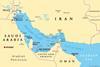
Strait of Hormuz disruption exposes risks far beyond oil
Renewed disruption in the Strait of Hormuz is showing how quickly a shipping crisis can spread through global energy, trade and food systems

Executive protection gaps persist one year after UnitedHealthcare CEO murder
Following the shooting of UnitedHealthcare CEO Brian Thompson, companies made bold security statements and bolder spending. Yet surveys show structured threat assessments and board oversight are still falling short of true executive protection.

Airmic 2026: Gulf deal buys time, not certainty, risk managers warned
A conditional agreement to reopen the Strait of Hormuz may ease pressure on energy markets, but companies with Gulf exposure should not assume regional stability has returned.

Risk tool spotlight: getting to grips with risk appetite
Appetite defines the level of risk organisations will venture into, but only if it sticks. Closing the gap between intent and reality means linking appetite to strategy, controls, investment and measurable indicators.

MS Amlin warns earthquake models miss supershear loss risk
The Lloyd’s insurer said supershear ruptures accounted for two thirds of insured earthquake losses since 2016, but remain largely absent from catastrophe models
SR Q2 2026: Reflections at 40,000 feet
Recent conferences have left me more convinced than ever that platforming risk voices is our raison d’être. Innovators are telling me that it’s all about improving decision-making, and this issue is dedicated to helping you do that.

RiskWorld 2026: why faster risk data is becoming critical
ICEYE’s Stephen Lathrope reflects on his key takeaways from RISKWORLD 2026, where climate, cyber and geopolitical risks highlighted the need for faster, more reliable data to improve situational awareness, response and recovery.



- Forgotten Password
- Contributors
- Feedback
- Media Pack
- © StrategicRISK 2026
Part of the Insurance and Risk group of
Newsquest Specialist Media
Newsquest Specialist Media



Published by Newsquest Media Group Limited,
registered in England & Wales with number 01676637
at The Echo Building, 18 Albert Road, Bournemouth,
England, BH1 1BZ - a USA Today company
registered in England & Wales with number 01676637
at The Echo Building, 18 Albert Road, Bournemouth,
England, BH1 1BZ - a USA Today company
Site powered by Webvision Cloud