



Risk Transfer
Captive and Parametrics Insurance
Latest Articles

HDI Global: Multinationals need global insurance programmes as local risks shift
As regulation, climate risk and captive demand reshape multinational insurance, HDI Global’s Phil McDowell explains why businesses need more than a patchwork of local policies – they need the consistency, control and reach that a truly global programme delivers.

Widening the lens: how FERMA is reshaping the relationship between business and insurance
Businesses are making investment decisions over three-to-five-year horizons while insurance remains largely tied to an annual cycle. FERMA is calling for longer-term relationships with insurers and greater clarity over how insurance will respond to AI.
- Previous
- Next







Widening the lens: how FERMA is reshaping the relationship between business and insurance
Businesses are making investment decisions over three-to-five-year horizons while insurance remains largely tied to an annual cycle. FERMA is calling for longer-term relationships with insurers and greater clarity over how insurance will respond to AI.

The convective storm surge and what risk managers can still control
Severe convective storm losses were below trend in the first half of 2026, but elevated storm activity shows why businesses cannot afford to ease off on resilience.


How parametric insurance is building resilience from Mexico to Malawi
This alternative insurance is a vital tool for risk managers worldwide needing fast liquidity and more certainty in the face of climate volatility. A report from Generali, in partnership with the UNDP’s Insurance and Risk Finance Facility, shows how governments, businesses and critical services are building resilience in these high-risk ...
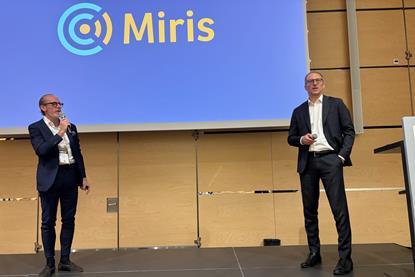
Risk-!n case study: Inside Sonepar’s mutual model for cyber resilience
As cyber threats escalate and insurance markets tighten, a group of major corporates—including Sonepar—are using a mutual captive model to share risk, intelligence and resilience strategies.

Case study: how packing provider DS Smith is tackling cyber risk head on
Packaging provider DS Smith recognises that cyber is a dynamic risk that demands ongoing evaluation – and traditional insurance modelling wasn’t delivering the goods. A new partnership offers innovative, proactive solutions that mean the difference between merely transferring risk and actually preventing loss. Sara Benwell reports.

Commercial collaboration: How can insurers stay relevant as captives grow in the UK?
As captive arrangements become more popular in the UK, insurers, brokers and regulators are considering how these models can help corporates tackle emerging and complex risks. But as the risk retention versus transfer conversation evolves, how can insurers tap into captives to remain relevant and support their underwriting?

Captives offer risk management control that is not at the whim of the insurance pricing cycle – Caroline Wagstaff
Chief executive emphasises that captives provide a useful tool as part of a multipronged risk strategy, where risk professionals can have greater oversight and influence over the short, medium and long-term management of risks

UK local authorities are rethinking their insurance approach - but risks abound
Local authorities are reassessing their risks, however, an increased focus on self-insurance creates new exposures to manage, says Gordon Winstanley, public sector lead at McLarens
SR:500 survey results: Risk managers push for earlier influence as threats accelerate
The SR:500 Emerging Risks survey reveals a landscape dominated by accelerating and interconnected threats. Against this backdrop, risk management must be embedded earlier in decision making to strengthen resilience.

Inside the hidden vulnerabilities weakening global data centre resilience
Data centres are at the heart of the digital economy, but rapid growth, energy constraints and evolving risks are testing their resilience. At an SR:500 event in partnership with FM, experts discussed the challenges facing the sector and how risk managers are responding.

What lies beneath the calm waters of Asia’s E&P lines
The executive and professional lines market is offering its most favourable pricing in years – but beneath these softening conditions, global tension, rising insolvencies and digital enforcement are ever-harder to navigate. Smart buyers will use the moment to secure better cover with partners built to last, writes BHSI’s Scotland Walsh-Riddle.

HDI Global: Multinationals need global insurance programmes as local risks shift
As regulation, climate risk and captive demand reshape multinational insurance, HDI Global’s Phil McDowell explains why businesses need more than a patchwork of local policies – they need the consistency, control and reach that a truly global programme delivers.

Watch: Risk that pays - measuring the impact of better decisions
Four risk experts explore how organisations can quantify risk against business objectives, demonstrate the return on investment of risk management and use AI and modern GRC tools to support better strategic decisions, while retaining the human judgement needed to turn data into meaningful insight.
In partnership with 

Why risk managers are turning to parametrics to solve operational challenges
As nat cats grow more severe, insurance gaps are widening - but parametric solutions might hold the key to resilience, says Dianna Nelson, a senior structurer at Swiss Re Corporate Solutions


- Forgotten Password
- Contributors
- Feedback
- Media Pack
- © StrategicRISK 2026
Part of the Insurance and Risk group of
Newsquest Specialist Media
Newsquest Specialist Media



Published by Newsquest Media Group Limited,
registered in England & Wales with number 01676637
at The Echo Building, 18 Albert Road, Bournemouth,
England, BH1 1BZ - a USA Today company
registered in England & Wales with number 01676637
at The Echo Building, 18 Albert Road, Bournemouth,
England, BH1 1BZ - a USA Today company
Site powered by Webvision Cloud