



Risk Type
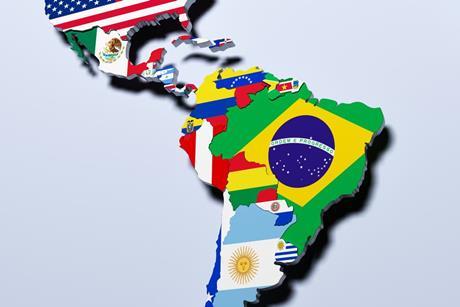
Regional spotlight: How El Niño could disrupt Latin America’s supply chains
A strengthening El Niño is bringing drought, flooding and infrastructure stress across Latin America, with agriculture, mining, logistics and energy facing different risks by country and sector.
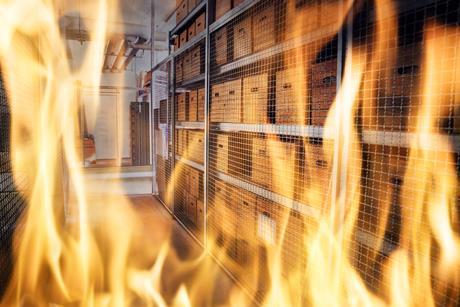
How warehouse design can amplify lithium-ion battery risk
As lithium-ion battery volumes rise, TT Club says warehouse operators need to rethink storage density, racking, contractual controls and fire protection to stop an isolated failure escalating into a major loss.

How cyber criminals are weaponising stolen corporate intelligence
Criminal groups are identifying regulatory, financial and reputational vulnerabilities in stolen data, using AI and specialist services to increase pressure on businesses and create new opportunities for fraud.

AI adoption outpaces governance as businesses struggle to close training gaps
Riskonnect research reveals significant gaps in AI training and oversight, even as organisations increasingly turn to the technology to manage growing operational pressures.
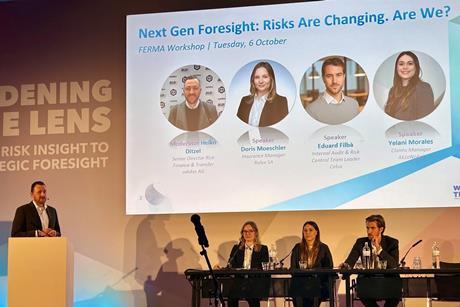
FERMA Forum 2026: FERMA’s first Next Gen Council reveals six-step risk methodology to help tackle interconnected risks
The collective of 14 risk professionals aged between 25 and 35 have forged a butterfly methodology, aiming to create a practical tool for risk managers across geographies and industry sectors

FERMA Forum 2026: Leveraging insurance data for risk foresight is a “real opportunity”
Insurers seek to better harness unique client dataset to inform risk foresight – especially as today’s interconnected risk landscape calls for a partnership approach, rather than just a risk transfer transaction

Climate risk exposes adaptation gaps in pharma supply chains
Almost nine in ten pharmaceutical companies expect climate-related disruption to their supply chains to increase, but new research suggests practical adaptation remains limited and supplier visibility is still a significant barrier.

No single route to lower-carbon freight as risk profiles diverge
Maritime, road, rail and air freight face very different safety, infrastructure and investment challenges as operators move away from fossil fuels.
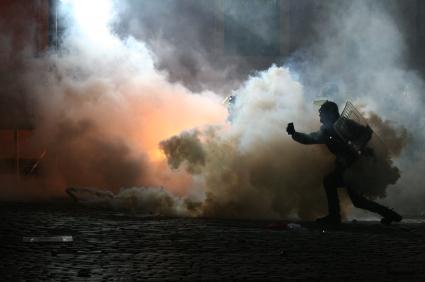
French riots highlight the risks of widespread civil unrest
Riots across France have damaged thousands of businesses, raising questions about business interruption, the accumulation of claims and the future of riot insurance.
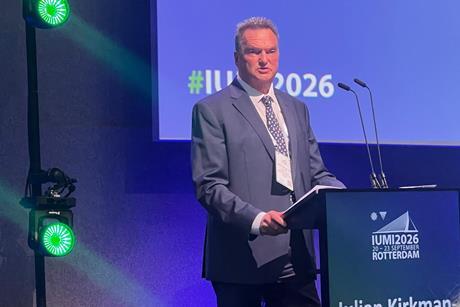
Supply chain disruption pushes risk managers to demand more from marine insurers
Corporate risk managers want marine insurers to move beyond traditional cargo cover and play a broader role in building supply chain resilience as geopolitical disruption, sanctions, cyber threats and longer transit routes intensify.
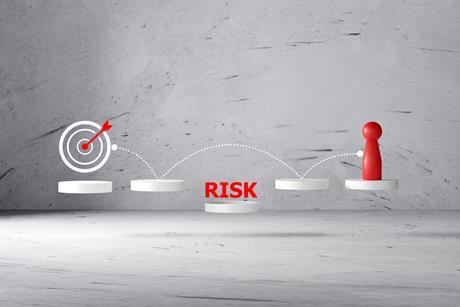
Opinion: Why risk identification should begin with business objectives
Chief risk officers could see their remits evolve if risk is reviewed in line with organisational objectives to inform future company decision-making versus the status quo of traditional risk assessments

Breaking boards’ “don’t ask, don’t tell” risk mindset with objectives-related risk assessments
A panel of thought leaders flag that linking risk management strategies to specific business objectives could prove pivotal in securing leadership investment for risk mitigations outside of compliance tick boxes

FERMA Forum 2026: Risk must be reframed as opportunity to get the ear of company boards
Growth and profit driven organisation chief executives struggle to comprehend dense, technical risk language, so risk professionals need to pivot communication styles to land their messaging

Risk briefing: Active assailant preparedness exposes gaps in emergency response planning
More than four in five organisations have a security plan for active assailant incidents, but only 32% say they could notify everyone at an affected site within seconds, according to new research from ASIS International.

Circuit overload: How hidden supply chain concentrations are putting businesses at risk
You have worked hard to ensure supply chains are diversified – yet in practice, when you look past tier one, those suppliers all run back to the same manufacturer, site or raw material. And that means it only takes a single failure to spell disaster for the entire system.

Why Japan’s lean supply chains are proving a soft target for ransomware
A run of attacks on Japanese logistics and distribution companies shows how quickly one breach can empty shelves when supply chains carry almost no slack


- Forgotten Password
- Contributors
- Feedback
- Media Pack
- © StrategicRISK 2026
Part of the Insurance and Risk group of
Newsquest Specialist Media
Newsquest Specialist Media



Published by Newsquest Media Group Limited,
registered in England & Wales with number 01676637
at The Echo Building, 18 Albert Road, Bournemouth,
England, BH1 1BZ - a USA Today company
registered in England & Wales with number 01676637
at The Echo Building, 18 Albert Road, Bournemouth,
England, BH1 1BZ - a USA Today company
Site powered by Webvision Cloud