



Risk Type
Catastrophe Risk

Why concentrated supply chains are driving higher business interruption losses
Business interruption claims are becoming more expensive, even as their frequency remains relatively stable. New analysis from Allianz Commercial highlights how concentrated production, rising recovery costs and dependence on critical suppliers are magnifying the financial consequences of disruption.

Regional spotlight: How El Niño could disrupt Latin America’s supply chains
A strengthening El Niño is bringing drought, flooding and infrastructure stress across Latin America, with agriculture, mining, logistics and energy facing different risks by country and sector.


How parametric insurance is building resilience from Mexico to Malawi
This alternative insurance is a vital tool for risk managers worldwide needing fast liquidity and more certainty in the face of climate volatility. A report from Generali, in partnership with the UNDP’s Insurance and Risk Finance Facility, shows how governments, businesses and critical services are building resilience in these high-risk ...
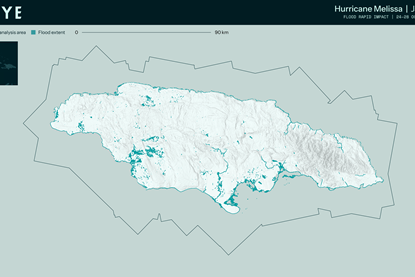
Case study: How radar satellite data transformed crisis response after Hurricane Melissa
When Hurricane Melissa struck Jamaica as a Category 5 storm, satellite-based synthetic aperture radar provided near real-time, countrywide damage intelligence through cloud cover, enabling government and humanitarian teams to prioritise resources, accelerate decision-making and reach the hardest-hit communities faster.

Shaken, not stalled: How TSMC protected operations during Taiwan’s strongest quake in 25 years
In the face of record-breaking tremors last year, Taiwanese contract chipmaker TSMC held its ground. By safeguarding operations and reassuring global clients, this was a master class in resilience born out of preparedness.

Sector spotlight: Food firms strengthen continuity as confidence falls
Food, beverage and agriculture businesses are formalising continuity plans, but confidence has fallen as risks spread across operations and gaps in resources and insurance protection persist.

Escalating intensity of hail in SCS events driving claims costs
Businesses must become more focused on mitigation as hail increasingly drives billion dollar insured loss events, says chief executive

Risk management lessons to learn from earthquake disasters in 2024
WTW’s Arash Nassirpour and Elide Pantoli look at the reasons behind building failures, highlighting the ongoing need for seismic risk assessments, retrofitting and improved construction codes; and the implications these have in other earthquake vulnerable cities around the world.

Ageing fleets. New solutions
Facing escalating geopolitical tensions and climate conditions, the maritime industry faces increasing vulnerabilities to disruption. AI and data analytics are stepping in to support future transformation, says Alice Kwok.

Asia: The ultimate resilience test
Asia has powered the global economy, yet disaster preparedness remains its greatest vulnerability. Resilience, not growth alone, will defi ne the future.

Parametric insurance: why risk managers are embracing this fast, flexible tool
Offering speed, flexibility and a way to close protection gaps, parametric insurance is gaining ground as a valuable complement to traditional cover, says Steve Harry, managing director of parametric solutions UK at Marsh Risk Analytics.

Inside the hidden vulnerabilities weakening global data centre resilience
Data centres are at the heart of the digital economy, but rapid growth, energy constraints and evolving risks are testing their resilience. At an SR:500 event in partnership with FM, experts discussed the challenges facing the sector and how risk managers are responding.
Ordering the chaos: how to manage connected risks
Getting to grips with interconnectedness means identifying the intricate links between the threats we face, then mapping, understanding and preparing for them. Our webinar sought to untangle this complex issue. Sara Benwell reports back.

Breaking boards’ “don’t ask, don’t tell” risk mindset with objectives-related risk assessments
A panel of thought leaders flag that linking risk management strategies to specific business objectives could prove pivotal in securing leadership investment for risk mitigations outside of compliance tick boxes
In partnership with 

Why risk managers are turning to parametrics to solve operational challenges
As nat cats grow more severe, insurance gaps are widening - but parametric solutions might hold the key to resilience, says Dianna Nelson, a senior structurer at Swiss Re Corporate Solutions


- Forgotten Password
- Contributors
- Feedback
- Media Pack
- © StrategicRISK 2026
Part of the Insurance and Risk group of
Newsquest Specialist Media
Newsquest Specialist Media



Published by Newsquest Media Group Limited,
registered in England & Wales with number 01676637
at The Echo Building, 18 Albert Road, Bournemouth,
England, BH1 1BZ - a USA Today company
registered in England & Wales with number 01676637
at The Echo Building, 18 Albert Road, Bournemouth,
England, BH1 1BZ - a USA Today company
Site powered by Webvision Cloud