



Risk Mitigation
Enterprise Risk Management

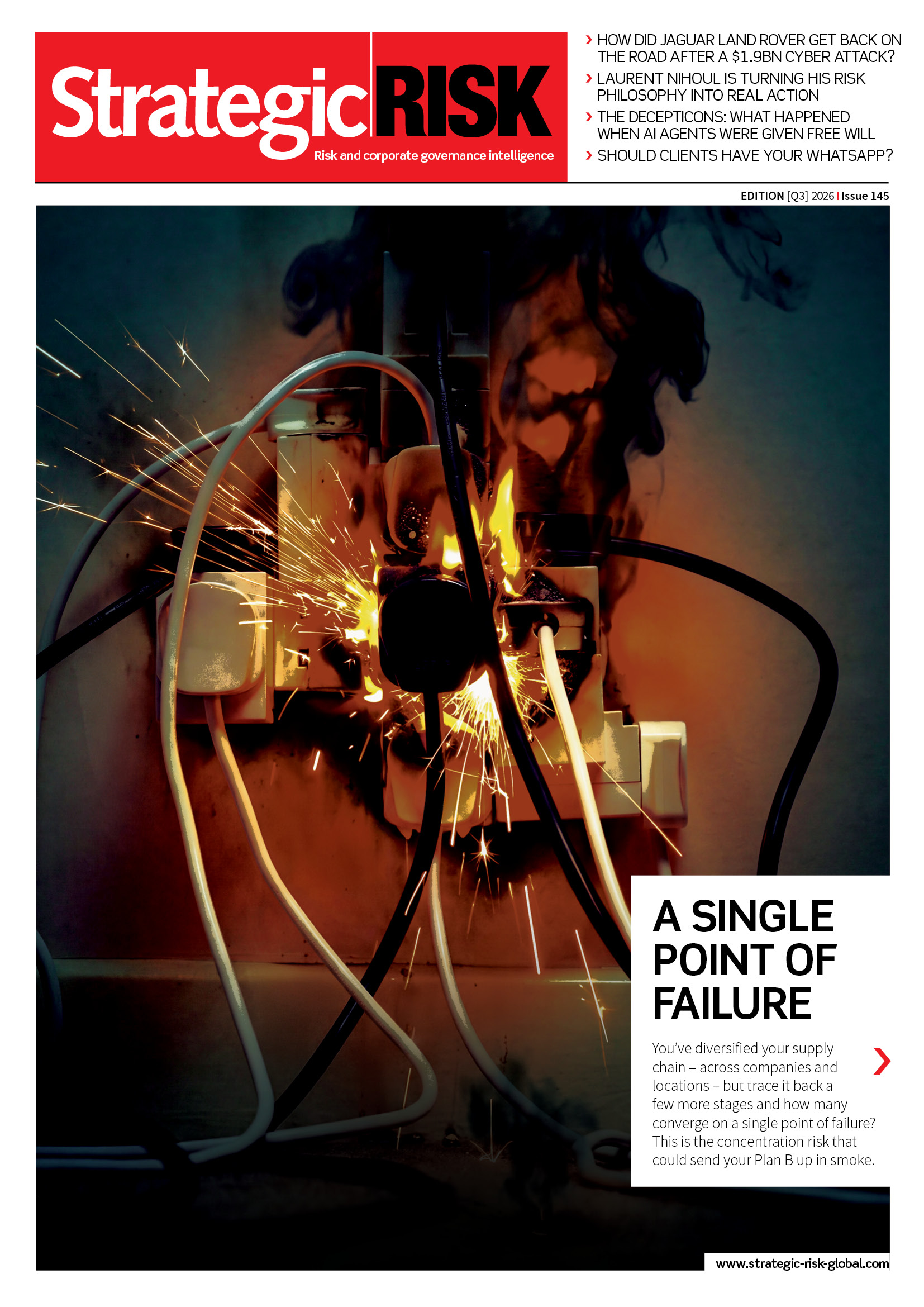
Circuit overload: How hidden supply chain concentrations are putting businesses at risk
You have worked hard to ensure supply chains are diversified – yet in practice, when you look past tier one, those suppliers all run back to the same manufacturer, site or raw material. And that means it only takes a single failure to spell disaster for the entire system.

AI adoption outpaces governance as businesses struggle to close training gaps
Riskonnect research reveals significant gaps in AI training and oversight, even as organisations increasingly turn to the technology to manage growing operational pressures.

Why Japan’s lean supply chains are proving a soft target for ransomware
A run of attacks on Japanese logistics and distribution companies shows how quickly one breach can empty shelves when supply chains carry almost no slack

Case study: How sanctions pressure exposed gaps in Citibank’s controls
A £4.7m fine against Citibank’s London branch exposes how sanctions controls came under strain as alert volumes surged following Russia’s invasion of Ukraine.
Case study: How Audemars Piguet prepares for the crisis it cannot predict
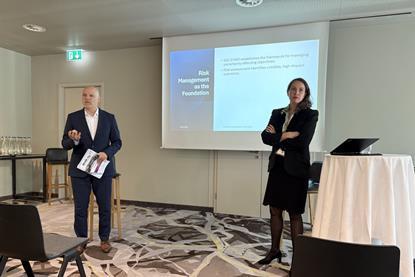
Audemars Piguet uses risk appetite, continuity planning and predefined crisis triggers to decide when disruption can be managed operationally and when leadership needs to step in.

Risk tools spotlight: Change management beyond the project plan
As transformation becomes continuous, organisations need to manage the risks created by the journey as carefully as the destination. Effective change management means understanding the human pressures that can undermine adoption, from fatigue and overload to disengagement and a lack of trust.

Risk managers take on wider remit as strategic role grows
Almost eight in ten risk managers now hold responsibilities beyond their core function, as organisations increasingly look to the profession to support strategic decisions, resilience and sustainability. But FERMA says greater responsibility must be matched by greater strategic influence and better risk quantification.

The risk report now costs 19 cents, should risk management salaries be adjusted down?
As AI makes traditional risk assessments faster and cheaper, the value of risk management increasingly lies in the decisions it helps shape. Drawing on insights from Risk Awareness Week 2026, Alex Sidorenko examines five skills that risk professionals need to remain relevant.
SR:500 survey results: Risk managers push for earlier influence as threats accelerate
The SR:500 Emerging Risks survey reveals a landscape dominated by accelerating and interconnected threats. Against this backdrop, risk management must be embedded earlier in decision making to strengthen resilience.

Shock after shock: Why risk leaders say climate resilience models are no longer fit for purpose
The compounding shocks created by climate change were the topic of our latest SR:500 roundtable. Organisations are being forced to reassess their long-held assumptions about resilience, continuity and operational risk as they navigate the road ahead.

Risk management’s moment has arrived. Here’s how to make the most of it
Risk leaders have never been closer to the top table. The opportunity now is to translate that proximity into genuine strategic influence, and the profession is better placed to do it than at any point in its history, says Alex Bentley, CEO, Clew

Regulatory convergence puts pressure on GRC leaders to rethink governance
As regulatory frameworks such as NIS2, DORA and the EU AI Act begin to overlap, organisations face mounting pressure to rethink how governance, risk and compliance operates in practice. Riskonnect’s Sherry Dillon explains why traditional compliance approaches are no longer enough.
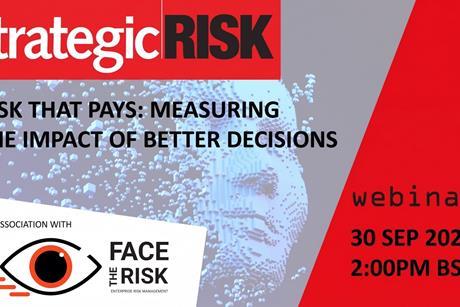
Webinar: Risk that pays - measuring the impact of better decisions
Four risk experts explore how organisations can quantify risk against business objectives, demonstrate the return on investment of risk management and use AI and modern GRC tools to support better strategic decisions, while retaining the human judgement needed to turn data into meaningful insight.
In partnership with 

Why risk managers are turning to parametrics to solve operational challenges
As nat cats grow more severe, insurance gaps are widening - but parametric solutions might hold the key to resilience, says Dianna Nelson, a senior structurer at Swiss Re Corporate Solutions


- Forgotten Password
- Contributors
- Feedback
- Media Pack
- © StrategicRISK 2026
Part of the Insurance and Risk group of
Newsquest Specialist Media
Newsquest Specialist Media



Published by Newsquest Media Group Limited,
registered in England & Wales with number 01676637
at The Echo Building, 18 Albert Road, Bournemouth,
England, BH1 1BZ - a USA Today company
registered in England & Wales with number 01676637
at The Echo Building, 18 Albert Road, Bournemouth,
England, BH1 1BZ - a USA Today company
Site powered by Webvision Cloud