



Risk Management

FERMA Forum 2026: Leveraging insurance data for risk foresight is a “real opportunity”
Insurers seek to better harness unique client dataset to inform risk foresight – especially as today’s interconnected risk landscape calls for a partnership approach, rather than just a risk transfer transaction

Risk insight is still failing to shape business decisions, Marsh finds
European organisations are investing in scenario analysis, supply-chain resilience and AI, but Marsh research suggests risk insight is still too often developed separately from the strategic decisions it is supposed to inform.

The philosopher: How Laurent Nihoul is bringing a different mindset to European risk management
FERMA’s CEO, Laurent Nihoul, started out in philosophy and continues to view the risk world through this lens: reaching new levels of understanding by asking the right questions, challenging assumptions and connecting ideas. Now he’s bringing that mindset, plus a real practical streak, to the top job in European risk ...
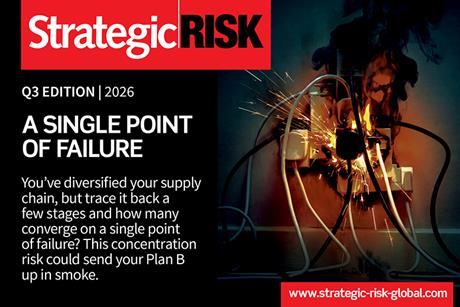
SR Q3 2026: When risks collide
The threats facing businesses may be familiar, but the way they are concentrating and cascading feels different. As one problem becomes five, risk managers need to understand where the weak points lie, and make sure their work changes what happens next.

FERMA Forum 2026: Generali Global Corporate and Commercial boss confirms there is room for improvement in meeting risk managers’ needs
The insurer chief executive additionally pointed to MGAs, parametric policies and distribution channels as prime areas of innovation that could impact risk professionals

FERMA Forum 2026: President urges risk professionals to challenge insurance cycle status quo and address AI paradox
Association leader encourages event attendees to “take risks” and “be open to leaving your comfort zone”

Heat stress: When dehydration becomes an operational risk
Rising temperatures are increasing heat exposure across ports, terminals and warehouses, including in regions where extreme heat was once unusual. TT Club says operators need to treat dehydration and heat stress as safety-critical risks rather than seasonal welfare issues.

Sector focus: Entertainment’s hidden workplace injury exposure
Workplace injuries are common across film, television and theatre, yet many never appear in claims data. New research is examining the reporting gap and what could improve prevention.

AI risk rises faster than organisations’ ability to manage it
AI has entered the top five business risks across short, medium and long-term horizons, but new FERMA research suggests organisations are struggling to build the governance and capabilities needed to keep pace.

Widening the lens: how FERMA is reshaping the relationship between business and insurance
Businesses are making investment decisions over three-to-five-year horizons while insurance remains largely tied to an annual cycle. FERMA is calling for longer-term relationships with insurers and greater clarity over how insurance will respond to AI.


- Forgotten Password
- Contributors
- Feedback
- Media Pack
- © StrategicRISK 2026
Part of the Insurance and Risk group of
Newsquest Specialist Media
Newsquest Specialist Media



Published by Newsquest Media Group Limited,
registered in England & Wales with number 01676637
at The Echo Building, 18 Albert Road, Bournemouth,
England, BH1 1BZ - a USA Today company
registered in England & Wales with number 01676637
at The Echo Building, 18 Albert Road, Bournemouth,
England, BH1 1BZ - a USA Today company
Site powered by Webvision Cloud