



Europe
Register for free with StrategicRISK
Unlock full access to award-winning journalism tailored for senior risk professionals. StrategicRISK goes beyond the headlines, offering in-depth analysis, exclusive case studies, and global insights designed to help you anticipate threats, shape strategy, and lead with confidence.
If you are already registered, please sign-in for access.

French riots highlight the risks of widespread civil unrest
Riots across France have damaged thousands of businesses, raising questions about business interruption, the accumulation of claims and the future of riot insurance.
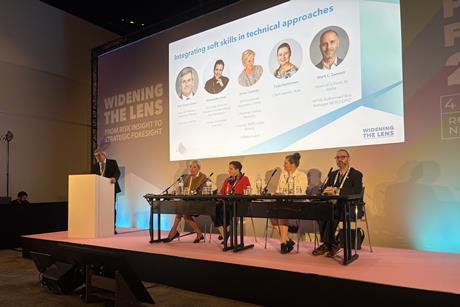
Why risk managers need to speak the language of the boardroom
Risk managers may have only minutes to convince senior executives to act on complex exposures. At a FERMA panel, speakers discussed how to turn detailed operational assessments into financial arguments and clear recommendations.

FERMA Forum 2026: FERMA president pushes to have “change of culture” around insurance LTAs
Association president advocates for LTAs to be truly long term, to enable much deeper conversations between businesses and insurers

Risk managers take on wider remit as strategic role grows
Almost eight in ten risk managers now hold responsibilities beyond their core function, as organisations increasingly look to the profession to support strategic decisions, resilience and sustainability. But FERMA says greater responsibility must be matched by greater strategic influence and better risk quantification.

Five minutes with Sharon Cilia Tortell, board member, FERMA and chief risk & sustainability officer at Steadfast Insurance Partners
Sharon Cilia Tortell, FERMA board member and chief risk & sustainability officer, discusses the growing interconnectedness of risks, the governance challenges posed by AI and why risk managers need a stronger voice in strategic decision-making.

FERMA Forum 2026: FERMA’s first Next Gen Council reveals six-step risk methodology to help tackle interconnected risks
The collective of 14 risk professionals aged between 25 and 35 have forged a butterfly methodology, aiming to create a practical tool for risk managers across geographies and industry sectors

FERMA Forum 2026: President urges risk professionals to challenge insurance cycle status quo and address AI paradox
Association leader encourages event attendees to “take risks” and “be open to leaving your comfort zone”

Widening the lens: how FERMA is reshaping the relationship between business and insurance
Businesses are making investment decisions over three-to-five-year horizons while insurance remains largely tied to an annual cycle. FERMA is calling for longer-term relationships with insurers and greater clarity over how insurance will respond to AI.

Five minutes with Richard Hoult, FERMA board member and Synthomer VP of risk, audit and compliance
Richard Hoult, FERMA board member, Airmic president and VP of risk, audit and compliance at Synthomer PLC, discusses geopolitical uncertainty, the need for risk managers to respond to the business and why collaboration across associations matters.

Five minutes with Gabriella Fraire, FERMA board member
Gabriella Fraire, FERMA board member, discusses interconnected risks, the rapid development of AI and her ambitions for the risk management profession.

The philosopher: How Laurent Nihoul is bringing a different mindset to European risk management
FERMA’s CEO, Laurent Nihoul, started out in philosophy and continues to view the risk world through this lens: reaching new levels of understanding by asking the right questions, challenging assumptions and connecting ideas. Now he’s bringing that mindset, plus a real practical streak, to the top job in European risk ...

Risk insight is still failing to shape business decisions, Marsh finds
European organisations are investing in scenario analysis, supply-chain resilience and AI, but Marsh research suggests risk insight is still too often developed separately from the strategic decisions it is supposed to inform.
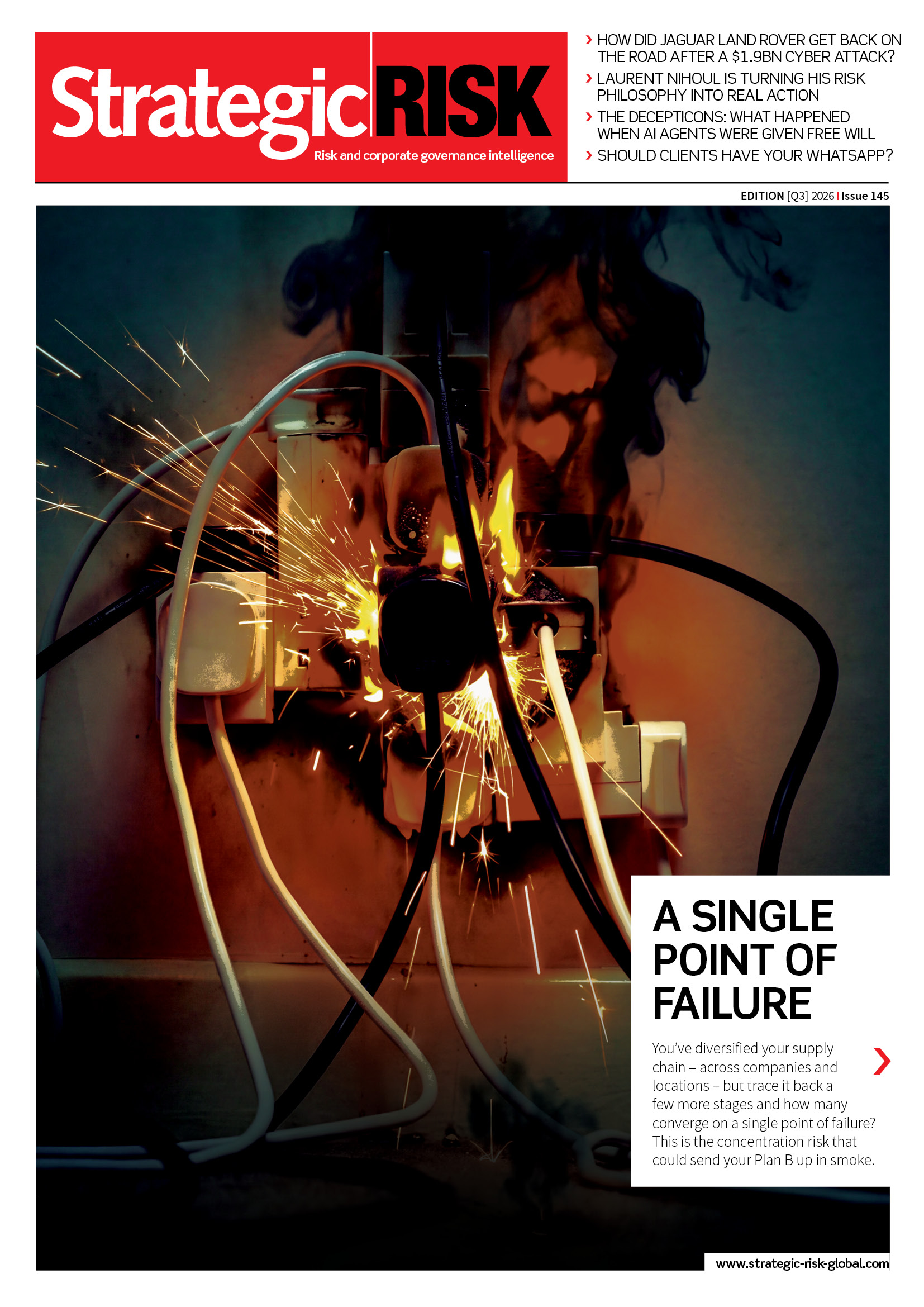
SR Q3 2026: When risks collide
The threats facing businesses may be familiar, but the way they are concentrating and cascading feels different. As one problem becomes five, risk managers need to understand where the weak points lie, and make sure their work changes what happens next.

Cannabis farms leave landlords facing six-figure repair bills
Cannabis farms are increasingly being found in shops, offices and other rented commercial premises, leaving landlords exposed to fire, water damage, dangerous electrical alterations and lengthy periods of vacancy, Zurich UK warns.

Low cyber penetration persisting despite 17% growth in cyber attacks on property firms
‘Property businesses are becoming increasingly reliant on digital systems while continuing to hold large amounts of sensitive personal and financial information,’ says analyst

Regulation watch: Frontier AI as a cyber weapon
Albert Yuen of Eversheds Sutherland examines regulatory developments in Asia and the UK/EU in response to the cyber risks posed by frontier AI models.

Supply chain disruption pushes risk managers to demand more from marine insurers
Corporate risk managers want marine insurers to move beyond traditional cargo cover and play a broader role in building supply chain resilience as geopolitical disruption, sanctions, cyber threats and longer transit routes intensify.

Rhine drought puts post-2018 resilience measures to the test
Companies have invested in specialist vessels, forecasting and alternative transport since the 2018 Rhine crisis. Record-low water levels are showing where those measures help, and where industrial supply chains remain tied to the river.

Case study: How sanctions pressure exposed gaps in Citibank’s controls
A £4.7m fine against Citibank’s London branch exposes how sanctions controls came under strain as alert volumes surged following Russia’s invasion of Ukraine.

Rare earth dispute exposes compliance collision in global supply chains
Chinese countermeasures against a major supply-chain due diligence body are beginning to collide with rare-earth trade, creating new problems for businesses trying to meet different regulatory requirements across global supply chains.



- Forgotten Password
- Contributors
- Feedback
- Media Pack
- © StrategicRISK 2026
Part of the Insurance and Risk group of
Newsquest Specialist Media
Newsquest Specialist Media



Published by Newsquest Media Group Limited,
registered in England & Wales with number 01676637
at The Echo Building, 18 Albert Road, Bournemouth,
England, BH1 1BZ - a USA Today company
registered in England & Wales with number 01676637
at The Echo Building, 18 Albert Road, Bournemouth,
England, BH1 1BZ - a USA Today company
Site powered by Webvision Cloud