



Risk Type
Cyber / Technology Risks

How cyber criminals are weaponising stolen corporate intelligence
Criminal groups are identifying regulatory, financial and reputational vulnerabilities in stolen data, using AI and specialist services to increase pressure on businesses and create new opportunities for fraud.

AI adoption outpaces governance as businesses struggle to close training gaps
Riskonnect research reveals significant gaps in AI training and oversight, even as organisations increasingly turn to the technology to manage growing operational pressures.

Case study: Inside the Beacon CRM breach impacting thousands of charities
A breach at CRM provider Beacon left customers across the charity and cultural sectors assessing what data may have been taken and how to respond before the full picture was clear.



Regional spotlight: India’s risk management evolution struggles to keep pace with growth
India is a place of contradictions – restless, industrious, but lacking the resilience to fully handle its status as the world’s fastest-growing economy. Risk management is evolving, but gaps remain. APAC correspondent Trevor Treharne spent a month in the country to learn more.

Cyber policy wordings have potential to provide unintended AI cover – IUA
Although believing that artificial intelligence is ‘an insurable exposure’, explicit coverage is still hard to find as use cases around the technology continue to evolve and differ vastly between businesses, says underwriting director

Legacy tech: the silent threat to CNI
Jen Modi, regional sales director at Barrier Networks, explores how legacy technology is increasing cyber and operational risk across critical national infrastructure, and what organisations can do to modernise without disrupting essential services.
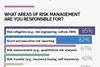
SR:500 survey results: Risk managers push for earlier influence as threats accelerate
The SR:500 Emerging Risks survey reveals a landscape dominated by accelerating and interconnected threats. Against this backdrop, risk management must be embedded earlier in decision making to strengthen resilience.

Inside the hidden vulnerabilities weakening global data centre resilience
Data centres are at the heart of the digital economy, but rapid growth, energy constraints and evolving risks are testing their resilience. At an SR:500 event in partnership with FM, experts discussed the challenges facing the sector and how risk managers are responding.

Greater expectations: Workplace healthcare is becoming a resilience issue, not just a perk
Workplace healthcare is becoming a strategic pressure point, as employees’ rising demands plus costly medical advances are pushing employers to rethink how far benefits should go and what they mean for resilience.

Regulatory convergence puts pressure on GRC leaders to rethink governance
As regulatory frameworks such as NIS2, DORA and the EU AI Act begin to overlap, organisations face mounting pressure to rethink how governance, risk and compliance operates in practice. Riskonnect’s Sherry Dillon explains why traditional compliance approaches are no longer enough.

Breaking boards’ “don’t ask, don’t tell” risk mindset with objectives-related risk assessments
A panel of thought leaders flag that linking risk management strategies to specific business objectives could prove pivotal in securing leadership investment for risk mitigations outside of compliance tick boxes
In partnership with 

Why risk managers are turning to parametrics to solve operational challenges
As nat cats grow more severe, insurance gaps are widening - but parametric solutions might hold the key to resilience, says Dianna Nelson, a senior structurer at Swiss Re Corporate Solutions


- Forgotten Password
- Contributors
- Feedback
- Media Pack
- © StrategicRISK 2026
Part of the Insurance and Risk group of
Newsquest Specialist Media
Newsquest Specialist Media



Published by Newsquest Media Group Limited,
registered in England & Wales with number 01676637
at The Echo Building, 18 Albert Road, Bournemouth,
England, BH1 1BZ - a USA Today company
registered in England & Wales with number 01676637
at The Echo Building, 18 Albert Road, Bournemouth,
England, BH1 1BZ - a USA Today company
Site powered by Webvision Cloud