



Operational Risk
Business Interruption

French riots highlight the risks of widespread civil unrest
Riots across France have damaged thousands of businesses, raising questions about business interruption, the accumulation of claims and the future of riot insurance.

Regulation watch: Frontier AI as a cyber weapon
Albert Yuen of Eversheds Sutherland examines regulatory developments in Asia and the UK/EU in response to the cyber risks posed by frontier AI models.

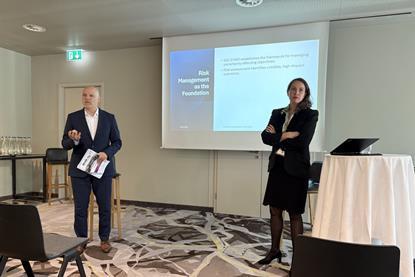
Case study: How Audemars Piguet prepares for the crisis it cannot predict
Audemars Piguet uses risk appetite, continuity planning and predefined crisis triggers to decide when disruption can be managed operationally and when leadership needs to step in.

Case study: how three airlines are folding risk into day-to-day operations
Speakers from Southwest Airlines, easyJet and Air Canada discussed how safety is being used not only to reduce incidents, but to improve reliability, sharpen decision-making and strengthen operational performance.

Case study: Building risk resilience into a high-stakes infrastructure expansion
In major infrastructure projects, the real test of risk management is not identifying threats but managing how they intersect. In this port expansion, resilience depended on building a framework that could respond as those connections shifted over time.

From tractors to terminals: why cyber risk is now a core exposure for farming businesses
As farming becomes increasingly digitised, cyber risk is emerging as one of the most under-appreciated threats facing the sector. From automated machinery and connected supply chains to underinsurance and climate volatility, agriculture is evolving into a complex risk environment that challenges traditional assumptions about protection and resilience.

Duty of care under pressure as Middle East conflict spreads across the region
Rapidly shifting airspace restrictions, infrastructure disruption and threats to maritime trade are testing corporate travel policies and crisis planning. James Henderson, chief executive officer of Healix International, explains the key risks organisations must manage as the situation evolves.

How the Middle East conflict could reshape supply chains – and how risk management can help
As conflict in the Middle East puts renewed pressure on energy flows, freight costs and key trade routes, Sapna Amlani, supply chains industry practice lead at Moody’s, explains why companies need to understand chokepoints, rethink efficiency-led models and build more resilient supply chains.

SR 500: Cyber resilience takes centre stage
Previously a back-office function, resilience in the digital space is now in the spotlight. At an SR:500 roundtable in asssociation with Marsh, risk leaders explored how AI, regulation and culture are highlighting new strategies and demanding board-level attention.

Spotlight on: the risks facing the global retail sector
Many have rung the death knell for retail over the years, but the sector isn’t dying – it’s just changing. Retail risk managers have their hands full, managing disruptors like AI integration and the next generations’ consumer habits, alongside supply chain issues and loss prevention. Trevor Treharne reports.

Ageing fleets. New solutions
Facing escalating geopolitical tensions and climate conditions, the maritime industry faces increasing vulnerabilities to disruption. AI and data analytics are stepping in to support future transformation, says Alice Kwok.

Greater expectations: Workplace healthcare is becoming a resilience issue, not just a perk
Workplace healthcare is becoming a strategic pressure point, as employees’ rising demands plus costly medical advances are pushing employers to rethink how far benefits should go and what they mean for resilience.
Webinar: Risk that pays - measuring the impact of better decisions
Four risk experts explore how organisations can quantify risk against business objectives, demonstrate the return on investment of risk management and use AI and modern GRC tools to support better strategic decisions, while retaining the human judgement needed to turn data into meaningful insight.
In partnership with 

Why risk managers are turning to parametrics to solve operational challenges
As nat cats grow more severe, insurance gaps are widening - but parametric solutions might hold the key to resilience, says Dianna Nelson, a senior structurer at Swiss Re Corporate Solutions


- Forgotten Password
- Contributors
- Feedback
- Media Pack
- © StrategicRISK 2026
Part of the Insurance and Risk group of
Newsquest Specialist Media
Newsquest Specialist Media



Published by Newsquest Media Group Limited,
registered in England & Wales with number 01676637
at The Echo Building, 18 Albert Road, Bournemouth,
England, BH1 1BZ - a USA Today company
registered in England & Wales with number 01676637
at The Echo Building, 18 Albert Road, Bournemouth,
England, BH1 1BZ - a USA Today company
Site powered by Webvision Cloud