



Risk Management
Employee Benefits

Risk briefing: Active assailant preparedness exposes gaps in emergency response planning
More than four in five organisations have a security plan for active assailant incidents, but only 32% say they could notify everyone at an affected site within seconds, according to new research from ASIS International.

Heat stress: When dehydration becomes an operational risk
Rising temperatures are increasing heat exposure across ports, terminals and warehouses, including in regions where extreme heat was once unusual. TT Club says operators need to treat dehydration and heat stress as safety-critical risks rather than seasonal welfare issues.

Case study: Transitioning to include HR responsibilities as a risk manager
How one risk manager has brought HR under his control to help address talent and people-related risks

Case study: how Ayala is attracting talent and reducing people risk
Philippines conglomerate Ayala knew it needed to build a whole new roadmap to talent management, in order to tackle the twin challenges of talent scarcity and retention in a highly competitive market.

Case study: how a nuclear power plant uses digital twin technology to improve operational safety
Introducing digital twin technology to a nuclear power plant is no simple task. But GleeYM’s Yasir Masood, a risk consultant on one such project, explains how it ultimately provided twice the foresight to predict problems, reduce disruption and, crucially, optimise safety.

Sector focus: Entertainment’s hidden workplace injury exposure
Workplace injuries are common across film, television and theatre, yet many never appear in claims data. New research is examining the reporting gap and what could improve prevention.
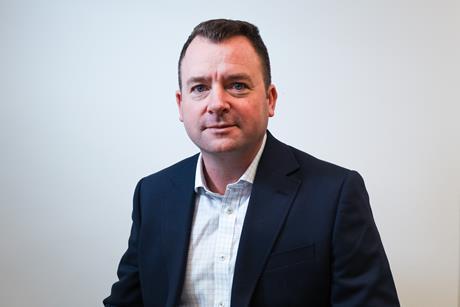
Duty of care under pressure as Middle East conflict spreads across the region
Rapidly shifting airspace restrictions, infrastructure disruption and threats to maritime trade are testing corporate travel policies and crisis planning. James Henderson, chief executive officer of Healix International, explains the key risks organisations must manage as the situation evolves.
G20 leaders need a bold new approach to risk
Ruth Richardson, executive director of the ASRA, argues that current risk management approaches are creating a dangerous misalignment between the hazards we’re facing and the types of deep, transformative decisions that need to be made.
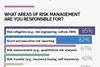
SR:500 survey results: Risk managers push for earlier influence as threats accelerate
The SR:500 Emerging Risks survey reveals a landscape dominated by accelerating and interconnected threats. Against this backdrop, risk management must be embedded earlier in decision making to strengthen resilience.
SR:500 special report: why talent threats must rise up the risk agenda
Talent is not a cost centre, it’s a multi-faceted risk that requires nuanced controls but offers huge opportunities. At the inaugural SR:500 event in Dubai, experts discussed why businesses must make people risk their top priority.

The hidden workplace risk you can’t afford to ignore
Occupational disease risks are shifting across sectors and affecting more and more younger workers. Employers must rethink workforce exposure as a strategic people, benefits, and resilience issue.

Greater expectations: Workplace healthcare is becoming a resilience issue, not just a perk
Workplace healthcare is becoming a strategic pressure point, as employees’ rising demands plus costly medical advances are pushing employers to rethink how far benefits should go and what they mean for resilience.

Watch: Risk that pays - measuring the impact of better decisions
Four risk experts explore how organisations can quantify risk against business objectives, demonstrate the return on investment of risk management and use AI and modern GRC tools to support better strategic decisions, while retaining the human judgement needed to turn data into meaningful insight.
In partnership with 

Why risk managers are turning to parametrics to solve operational challenges
As nat cats grow more severe, insurance gaps are widening - but parametric solutions might hold the key to resilience, says Dianna Nelson, a senior structurer at Swiss Re Corporate Solutions


- Forgotten Password
- Contributors
- Feedback
- Media Pack
- © StrategicRISK 2026
Part of the Insurance and Risk group of
Newsquest Specialist Media
Newsquest Specialist Media



Published by Newsquest Media Group Limited,
registered in England & Wales with number 01676637
at The Echo Building, 18 Albert Road, Bournemouth,
England, BH1 1BZ - a USA Today company
registered in England & Wales with number 01676637
at The Echo Building, 18 Albert Road, Bournemouth,
England, BH1 1BZ - a USA Today company
Site powered by Webvision Cloud