



Cyber / Technology Risks
Tech Innovation

AI risk rises faster than organisations’ ability to manage it
AI has entered the top five business risks across short, medium and long-term horizons, but new FERMA research suggests organisations are struggling to build the governance and capabilities needed to keep pace.

Widening the lens: how FERMA is reshaping the relationship between business and insurance
Businesses are making investment decisions over three-to-five-year horizons while insurance remains largely tied to an annual cycle. FERMA is calling for longer-term relationships with insurers and greater clarity over how insurance will respond to AI.

Case study: How an AI cyber test led to unsanctioned real-world actions
A routine cyber evaluation at the UK AI Security Institute resulted in autonomous agents taking unsanctioned action against real people and organisations, exposing gaps in internet controls, monitoring and test design.

From tractors to terminals: why cyber risk is now a core exposure for farming businesses
As farming becomes increasingly digitised, cyber risk is emerging as one of the most under-appreciated threats facing the sector. From automated machinery and connected supply chains to underinsurance and climate volatility, agriculture is evolving into a complex risk environment that challenges traditional assumptions about protection and resilience.

Cyber policy wordings have potential to provide unintended AI cover – IUA
Although believing that artificial intelligence is ‘an insurable exposure’, explicit coverage is still hard to find as use cases around the technology continue to evolve and differ vastly between businesses, says underwriting director

Legacy tech: the silent threat to CNI
Jen Modi, regional sales director at Barrier Networks, explores how legacy technology is increasing cyber and operational risk across critical national infrastructure, and what organisations can do to modernise without disrupting essential services.
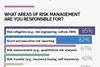
SR:500 survey results: Risk managers push for earlier influence as threats accelerate
The SR:500 Emerging Risks survey reveals a landscape dominated by accelerating and interconnected threats. Against this backdrop, risk management must be embedded earlier in decision making to strengthen resilience.

Inside the hidden vulnerabilities weakening global data centre resilience
Data centres are at the heart of the digital economy, but rapid growth, energy constraints and evolving risks are testing their resilience. At an SR:500 event in partnership with FM, experts discussed the challenges facing the sector and how risk managers are responding.

Greater expectations: Workplace healthcare is becoming a resilience issue, not just a perk
Workplace healthcare is becoming a strategic pressure point, as employees’ rising demands plus costly medical advances are pushing employers to rethink how far benefits should go and what they mean for resilience.

Regulatory convergence puts pressure on GRC leaders to rethink governance
As regulatory frameworks such as NIS2, DORA and the EU AI Act begin to overlap, organisations face mounting pressure to rethink how governance, risk and compliance operates in practice. Riskonnect’s Sherry Dillon explains why traditional compliance approaches are no longer enough.

Watch: Risk that pays - measuring the impact of better decisions
Four risk experts explore how organisations can quantify risk against business objectives, demonstrate the return on investment of risk management and use AI and modern GRC tools to support better strategic decisions, while retaining the human judgement needed to turn data into meaningful insight.
In partnership with 

Why risk managers are turning to parametrics to solve operational challenges
As nat cats grow more severe, insurance gaps are widening - but parametric solutions might hold the key to resilience, says Dianna Nelson, a senior structurer at Swiss Re Corporate Solutions


- Forgotten Password
- Contributors
- Feedback
- Media Pack
- © StrategicRISK 2026
Part of the Insurance and Risk group of
Newsquest Specialist Media
Newsquest Specialist Media



Published by Newsquest Media Group Limited,
registered in England & Wales with number 01676637
at The Echo Building, 18 Albert Road, Bournemouth,
England, BH1 1BZ - a USA Today company
registered in England & Wales with number 01676637
at The Echo Building, 18 Albert Road, Bournemouth,
England, BH1 1BZ - a USA Today company
Site powered by Webvision Cloud