



Risk Mitigation
Health and Safety

How warehouse design can amplify lithium-ion battery risk
As lithium-ion battery volumes rise, TT Club says warehouse operators need to rethink storage density, racking, contractual controls and fire protection to stop an isolated failure escalating into a major loss.

The convective storm surge and what risk managers can still control
Severe convective storm losses were below trend in the first half of 2026, but elevated storm activity shows why businesses cannot afford to ease off on resilience.


Case study: how three airlines are folding risk into day-to-day operations
Speakers from Southwest Airlines, easyJet and Air Canada discussed how safety is being used not only to reduce incidents, but to improve reliability, sharpen decision-making and strengthen operational performance.
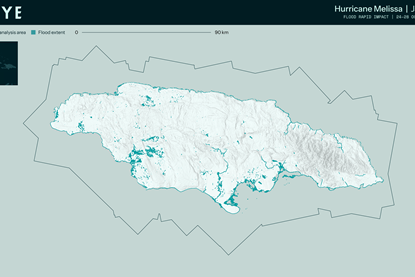
Case study: How radar satellite data transformed crisis response after Hurricane Melissa
When Hurricane Melissa struck Jamaica as a Category 5 storm, satellite-based synthetic aperture radar provided near real-time, countrywide damage intelligence through cloud cover, enabling government and humanitarian teams to prioritise resources, accelerate decision-making and reach the hardest-hit communities faster.

Case study: Multi-agency counter-terrorism exercise tests response on cross-channel ferry
Counter Terrorism Policing and blue light partners have tested their response to a major terrorism incident during a large-scale exercise on a cross-channel ferry at the Port of Poole.

Kidnap and ransom: a risk manager’s guide to protecting people abroad
Kidnap threats are rising worldwide and the danger to business travellers and overseas employees is particularly acute. With incidents reported across at least a dozen high-risk countries, companies that fail to prepare are gambling with their most valuable asset: their people.

Duty of care under pressure as Middle East conflict spreads across the region
Rapidly shifting airspace restrictions, infrastructure disruption and threats to maritime trade are testing corporate travel policies and crisis planning. James Henderson, chief executive officer of Healix International, explains the key risks organisations must manage as the situation evolves.

ESG, governance and the failure to manage risks to society
As public scrutiny of organisational behaviour intensifies, ESG needs to move beyond reporting and reputation management. Anita Punwani CFIRM argues that risk management must place greater emphasis on protecting people, society and the environment, particularly those most exposed to harm.
SR:500 survey results: Risk managers push for earlier influence as threats accelerate
The SR:500 Emerging Risks survey reveals a landscape dominated by accelerating and interconnected threats. Against this backdrop, risk management must be embedded earlier in decision making to strengthen resilience.

Shock after shock: Why risk leaders say climate resilience models are no longer fit for purpose
The compounding shocks created by climate change were the topic of our latest SR:500 roundtable. Organisations are being forced to reassess their long-held assumptions about resilience, continuity and operational risk as they navigate the road ahead.

Risk management’s moment has arrived. Here’s how to make the most of it
Risk leaders have never been closer to the top table. The opportunity now is to translate that proximity into genuine strategic influence, and the profession is better placed to do it than at any point in its history, says Alex Bentley, CEO, Clew

Regulatory convergence puts pressure on GRC leaders to rethink governance
As regulatory frameworks such as NIS2, DORA and the EU AI Act begin to overlap, organisations face mounting pressure to rethink how governance, risk and compliance operates in practice. Riskonnect’s Sherry Dillon explains why traditional compliance approaches are no longer enough.

Breaking boards’ “don’t ask, don’t tell” risk mindset with objectives-related risk assessments
A panel of thought leaders flag that linking risk management strategies to specific business objectives could prove pivotal in securing leadership investment for risk mitigations outside of compliance tick boxes
In partnership with 

Why risk managers are turning to parametrics to solve operational challenges
As nat cats grow more severe, insurance gaps are widening - but parametric solutions might hold the key to resilience, says Dianna Nelson, a senior structurer at Swiss Re Corporate Solutions


- Forgotten Password
- Contributors
- Feedback
- Media Pack
- © StrategicRISK 2026
Part of the Insurance and Risk group of
Newsquest Specialist Media
Newsquest Specialist Media



Published by Newsquest Media Group Limited,
registered in England & Wales with number 01676637
at The Echo Building, 18 Albert Road, Bournemouth,
England, BH1 1BZ - a USA Today company
registered in England & Wales with number 01676637
at The Echo Building, 18 Albert Road, Bournemouth,
England, BH1 1BZ - a USA Today company
Site powered by Webvision Cloud