



All Supplement - Catastrophe Risk articles – Page 3
-
 Features
The Hayward fault: Is it America’s most dangerous?
A repeat of the 1868 Hayward fault California earthquake today would have enormous consequences. Property worth more than $500 billion and approximately 5 million people in six surrounding counties would suffer badly from such a quake. By Thomas Brocher and other members of the 1868 Hayward Earthquake Alliance
-
 Catastrophe Risk
Beyond tropical cyclones
The potential of climate change to alter the frequency or severity of meteorological risks is not exclusive to tropical cyclones. Other storms may also become more intense, and making property resilient is the only way to reduce losses. By Mark Bove
-
 Features
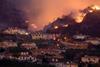
Bringing brush fire risk under control
In the last decade US brush fire exposures have nearly tripled and the frequency of such events is clearly on the rise. By Amy Block
-
 Features
Business interruption in the land of earthquakes
A large Japanese earthquake could have a devastating effect on the continuity of critical industries in the country and their earnings. By Dennis Kuzak and Masanori Kobayashi
-
Features
An engineer looks at cat models
Siamak Daneshvaran, senior vice president and director of engineering for Aon Re’s Impact Forecasting, talks to Catastrophe Risk Management. By Lee Coppack
-
Catastrophe Risk
Catastrophe modelling from a European perspective
The Reinsurance Association of America (RAA) and International Underwriting Association (IUA) will again host the conference in London
-
 Features
Will changes in climate increase insured losses
The general effects of a global temperature increase they may contribute to a decrease in property risk in some places, while increasing it at others. By Dance Zurovac-Jevtic, Rebecca Cheetham and Caroline Daniell
-
 Features
How do coastal cities fare under rising flood risk?
Rising sea levels will amplify the flood risk in coastal cities like Miami, New York, Rotterdam and Guangzhou, while population increase and economic growth will increase the value of the assets at risk to new levels By Celine Herweijer and others
-
 Catastrophe Risk
Lloyd’s spells out need to understand unique and complex terrorism threat
Asian terrorism threat is unique, complex and specific to the region, says Lloyd's
-
 Features
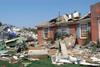
The financial consequences of natural disasters
There is significant value for the public sector to shift from a disaster relief approach – looking for financial support after an event – to one which includes the accumulation of funds and the spreading of risks before a loss occurs. By Reto Schnarwiler
-
 Catastrophe Risk
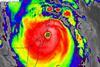
Hurricane Katrina illustrates potential for even larger disasters
Academic studies are now reinforcing the perception of the growing possibility of economic disaster if a large hurricane hits one or more of the big US metropolitan area
-
 Features
No more easy oil
The development of deep water fields, often in remote locations lacking infrastructure, poses new challenges to the offshore energy industry, which must operate facilities safely over 20 to 30 years in harsh environmental conditions. By Phil Thomas and David Brown
-
 Features
Exposures: An industry solution at last?
The insurance industry is continuing its efforts to agree a standard for catastrophe exposure data. By Puneet Bhara
-
 Catastrophe Risk
Subsidence losses set to rise as a result of global warming
Subsidence is a creeping catastrophe.
-
Catastrophe Risk
Non-traditional markets
A growing feature of the securitisation market in two years has been the development of instruments designed to help manage risk outside the traditional geographical areas
-
 Catastrophe Risk
The Goldfinger catastrophe theorem
James Bond villain Auric Goldfinger explained his approach to causation in the following way: “Once is happenstance. Twice is coincidence. The third time it’s enemy action.”
-
 Features
UK flood claim and counter-claim
There have been times in the past year when the British public have witnessed scenes like those gunfighters at the OK Corral where insurers have stood their ground and called on Parliament to do something about flooding – or else. By Sam Elliott
-
 Catastrophe Risk
Disasters bulletin: 7 August - 19 November 2007
By Professor Bill McGuire of Benfield - UCL Hazard Research Centre
-
 Features
Culture that Avoids Disaster
Six key areas of organisational culture are essential to prevent catastrophic incidents like the Texas City refinery explosion and loss of the space shuttle Columbia. By Scott Berger
-
 Features
From Soup and Beer to Drought and Downpour
Some 30% of businesses worldwide have some direct exposure to weather related risks and 60% have indirect exposure. By Jean-Christophe Garaix