



All StrategicRISK Global articles in December 2007 – Page 3
-
 Analysis
Reputation and trust
What lessons can be learnt from the recent DEFRA/HMRC scandals? Garry Honey takes a view
-
 Online only
2008’s top ten IT security threats
Olympics, online advertisements and Web 2.0 threats top hacker’s to-do lists
-
 Analysis
Christmas workers pose data risk
Fast screening techniques may go some way towards mitigating the data risk posed by seasonal workers finds Nathan Skinner
-
 Online only
RMS: Time slipping for decision over TRIA extension
Cancellation of Federal backstop could eliminate growth and availability of commercial terrorism coverage, says RMS
-
 Online only
Review of SCIF uncovers ‘serious’ problems
An audit of California’s State Compensation Insurance Fund (SCIF) shows serious structural and operational deficiencies
-
Online only
Weak corporate governance detrimental to rating: Fitch
In a new report the agency said that corporate governance if not adequately conducted can be detrimental to a firms overall health
-
Interviews
Zurich elevates CRO to exec status
Appoints Axel Lehmann to the role of chief risk officer
-
 Online only
House of Representatives approves amended TRIA
The US House of Representatives has voted to extend and expand the post-9/11 terrorism risk insurance program
-
 Features
Culture that Avoids Disaster
Six key areas of organisational culture are essential to prevent catastrophic incidents like the Texas City refinery explosion and loss of the space shuttle Columbia. By Scott Berger
-
 Features
From Soup and Beer to Drought and Downpour
Some 30% of businesses worldwide have some direct exposure to weather related risks and 60% have indirect exposure. By Jean-Christophe Garaix
-
 Features
How Building Codes Reduce Catastrophe Losses
Buildings completed under the requirements of a new Florida building code withstood hurricane winds in 2004 and 2005 while neighbouring, older properties were destroyed. But it should not take a disaster for our communities to adopt, implement and enforce the building safety codes that save lives every day. By Richard ...
-
 Features
Getting a Handle on Cargo
Cargo accumulations. Hard to understand. Harder still to quantify. Until now. By Herbie Lloyd
-
 Features
Public Cat Schemes: Kittens Everywhere You Look!
Although the history of government insurance purchase for catastrophe risks is much shorter than that of the private sector, it is growing fast, as evidenced by the number of new schemes worldwide and the interest they have sparked in neighbouring countries. There are also clear trends in the development of ...
-
 Catastrophe Risk
String theory and catastrophe risks
The application of intellectual energy to the greatest puzzles, such as the origin of the universe, produces such imagination straining explanations as string theory
-
 Catastrophe Risk
World Records, Catastrophes and Extreme Value Theory
For curiosity or betting or for insurance and risk management purposes, we often require estimates of how ‘extreme' the values might be over a given time period. By John Birkenhead
-
Features
From Chaos Theory to Commodities
Isla Gilmour is a meteorologist who advises commodities traders on the impact of weather on their business. She talks to Catastrophe Risk Management about how science supports this important market. By Lee Coppack
-
 Features
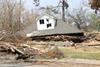
Post-Katrina Litigation, Shows Need for Clarity
Hurricane Katrina was the single largest loss in the history of the insurance industry. Its place in the annals of insurance is also secure by virtue of it being the single most litigated loss on record. By Claire Wilkinson
-
 Catastrophe Risk
A deceptive quiet: Exposures continue to rise
The final tally for the 2007 hurricane season was 14 named storms, slightly above the long term average, and six hurricanes
-
 Catastrophe Risk
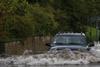
Fallout continues from UK floods
Verbal skirmishes have continued between the Association of British Insurers (ABI) and the UK Government as a result of the £3 billion 2007 summer floods
-
 Catastrophe Risk
A global earthquake model
A project to develop a uniform, worldwide earthquake model begins in early 2008 under the auspices of the OECD Global Science Forum