



Features – Page 17
-
 Features
Managing product safety recalls
Ed Mitchell and Thomas Zanner explain how to deal with recalls in the food and drink industry
-
 Features
Telling it like it is
Communication can be the difference between a good and badly handled product recall, says Julia Johnson
-
 Features
Gustaf Hamilton and Charlotte Barnekow
Perhaps the risk management profession is expected to cover too much. There should be limits set about what fits into a risk manager's job description
-
 Features
Risk in a recession
Risk is following hard on the heels of the recession, warns Nathan Skinner
-
 Features
Can you dig for wealth and be green?
Extractive industries and sustainability do not go hand in hand. Or do they? We asked Total and Rio Tinto for their views
-
 Features
What do you know?
Managing risk information successfully has become a priority for European companies. Graham Buck asks what a risk information system needs to be effective for everyone within the organisation
-
 Features
The cost of compliance
While businesses may greet EU proposals for new regulation with a universal groan, Andrew Williams asks – is the need for compliance actually an aid for risk managers in establishing better systems and practices?
-
 Features
Rome II: New Year New rules
EU regulation Rome II should bring greater certainty over liability issues. Wendy Hopkins and Stephen Turner write
-
 Features
Getting ready for The 31000
The new ISO standard is meeting with a mixed response from risk managers, says Neil Hodge
-
 Features
Taking a united approach
Alex Kiffen reports on a recent round table discussion on how to deal with catastrophe and how to prevent it
-
 Features
An integrated approach
Aymeric Boyer-Vidal, GDF-Suez’s director of audit and risk discusses embedding enterprise risk management and handling a crisis
-
 Features
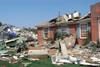
Why the next big northeast hurricane will surprise
A repeat of the 1938 New England Hurricane could cause losses as large as Hurricane Katrina in 2005. By Karen Clark
-
Features
Calculating the risk of terrorism
An investment in basic research on terrorism will be paid back many times, as a better knowledge of threats will make risk calculation more of a science than an art. By Professor Alex Schmid
-
 Features
Winds of change for agricultural risks
Changing climate and commodity price trends are steering agricultural risk in a new direction. The result is a rethink of exposure, products and product design. By Thomas Heintz
-
 Features
Subsidence: A gradual catastrophe
Subsidence losses have been a hidden catastrophe for the insurance industry. UK buildings insurers have paid out a total of more than €8 billion since 1976, and the cost of claims in France since its inclusion in the Catastrophes Naturelles scheme in 1989 forced the government to increase insurance premium ...
-
Features
Converting knowledge into action
Anselm Smolka was one of the few geoscientists in the insurance sector when he joined Munich Re Group. Today he is head of Geo Risks, corporate underwriting for the group. He tells Catastrophe Risk Management about his work. By Lee Coppack
-
Features
A geographical understanding of risk
The advent of satellite navigation and the birth of Google Earth, Google Maps and France’s Geoportail have alerted everyone involved in the management of catastrophes to the value of geographical information systems. By François-Xavier Goblet
-
Features
Seeing risk: Floods
The 2007 UK summer floods pushed flooding up the agenda for politicians and businesses alike. A year and a half later topographical maps and modelling technologies have improved to give us better tools to manage the risks. By Justin Butler
-
Features
Hurricane risk at high resolution
We are using high resolution climate models and supercomputers to assess future hurricane risk to the United States and Caribbean at precision never before seen. By Greg Holland with James Done, Jim Hurrell, David Hosansky and Asuka Suzuki
-
Features
Catastrophe risk management using multiple models
While catastrophe models follow a similar overall approach to risk assessment, there can be wide variations in results, leaving users to question which is the most appropriate. By Atul Khanduri




