


Features – Page 19
-

-
 Features
Fixing injury claims
The Ministry of Justice has proposed reforms to the claims process in the UK. Philip Tracey outlines what they mean and how they could affect the issue of costs
-
 Features
ERM in uncertain times
The credit crunch is likely to make life harder for commercial insurance buyers but there are opportunities to create value as well, says Lindsay Cox
-
 Features
Bombs, bird flu and banana skins
There are many catastrophic events that can cause disruption to business, but more often than not its a disorganised response that causes the most serious problems. Peter Power looks at the key features of a crisis management plan
-
Features
Risk engineering
In a competitive environment, preventing loss is vital. Nathan Skinner garners the thoughts of five risk managers on the subject
-

-
 Features
The class war
Nathan Skinner tracks the latest developments in European legislation towards evolving a US-style system of collective redress
-
 Features
Forgotten, but not gone?
When cases of bird flu were widespread in 2005 and 2006, the risk of a worldwide human influenza pandemic was taken as a serious threat. While the threat has not receded, European companies may have let down their guard, says Graham Buck
-
 Features
The new risk management landscape
As risk management becomes a boardroom issue, risk managers face new challenges, say Simon Perry and Geraldine Rutter
-
 Features
More than just good PR
Operating in politically and socially volatile regions need not be a potential recipe for disaster. Mike Penrose gives some guidelines for a strategy that will benefit both your business and the local community
-
 Features
The fight against money laundering
‘Pre-wash, wash and spin-dry’ are the cycles that apply to a washing machine and to money laundering. It may appear odd to compare the two but they reflect a reality based in law and in history, explains Charlotte Gaudin
-
 Features
Hans Gorrée and Peter A den Dekker
Two dutch risk management greats talk about what has changed in risk management over their lifetimes
-
 Features
See no evil
Is Google as squeaky clean as its users like to think? Lee Coppack considers privacy and trust, and looks at the risks that may lie in wait for the world’s favourite search engine
-
 Features
Infrastructure deterioration
Many parts of the US infrastructure such as levees, dams, bridges and roads have deteriorated to a point that they may not withstand a catastrophe or the use to which they would be put during a disaster. By Paul Mlakar
-
 Features
Working towards solutions for flood
Since 1980, Europe has suffered 17 catastrophic floods that have done at least $75 billion worth of economic damage in total. Only about 25% of these losses were insured. The devastating and costly events of 2002 and 2007 have spurred searches for better planning, precautions and financial solutions. By Lee ...
-
 Features
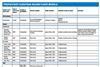
Inland flood models available
Catastrophe Risk Management surveyed the three proprietary modelling companies, AIR Worldwide, EQECAT and Risk Management Solutions (RMS) to discover what European inland flood models are available. By Lee Coppack
-
 Features
Why flood losses are increasing
Exposure, the governing factor An almost explosive growth in the values of property in flood-prone areas and the much greater vulnerability of the things that people own are the main reasons for rising flood losses. By Wolfgang Kron
-
 Features
The watercourse of nature
Anne-Claire Serres is an agronomist specialised in hydrology, who heads the catastrophe quantification team at Paris Re. She talks to Catastrophe Risk Management about her work. By Lee Coppack
-
 Features
Strategic planning to reduce flood impact across Europe
On 26 November 2007, the new European Directive on the assessment and management of flood risks entered into force. For the first time, EU legislation requires its members to plan strategically to reduce the adverse consequences of flood events on human health, economic activities, the environment and cultural heritage. ...
-
 Features
The Black Swan slain
Developing futures scenarios is a strategic risk management technique for considering what could happen in the future and its possible impact on a company’s objectives. The goal is to establish the basis for managing uncertain or unknown events.By Scott Randall




