



All StrategicRISK Global articles in Online only – Page 22
-
 Analysis
Bigger is riskier
The world’s population hit seven billion on October 31. StrategicRISK explores the risks of a crowded earth
-
 Features
Managing your way out of a crisis
Recent research shows that most companies will face a value destroying catastrophe at least once every five years. Here two experts show how responding well to one can actually help boost the value and reputation of your company
-
 Analysis
Thai floods hit electronics supply chain
Hardware suppliers Apple, Sony and Toshiba all expect major delays
-
 Comment
Eurozone crisis: Unanswered questions
With a Greek default looking increasingly like a near certainty there are still a heap of unanswered questions surrounding Europe’s €1 trillion bailout fund
-
 Marketing
Presidents' Roundtable 2011
For this 12 page special supplement StrategicRISK gathered the presidents of Europe’s leading risk management associations to discuss the key threats and opportunities facing the profession. Read or download to hear the views of Europe’s top risk managers.
-
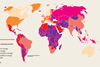 Risk Map
Risk Atlas: Economic risks
Facing up to the eurozone crisis: Banks and taxpayers would need to stump up at least €2 trillion to sort out debt woes
-
 Analysis
Cyber attacks reach “disturbing” levels
Cyber attacks on the Government, the public and industry have reached disturbing levels, according to the chief of Britain’s spy centre
-
 Analysis
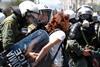
Strife in the streets
Risk management is likely to continue to remain in the foreground for organisations with facilities or suppliers in troubled countries in North Africa and the Middle East, while in Europe measures designed to remedy national financial problems are likely to spark off further public protests and even riots
-
 Graphics
Infographic: Eurozone crisis
Europe’s sovereigns are in a fine mess, as this infographic from StrategicRISK shows. As the debt crisis worsens, Portugal and Ireland are struggling to regain their composure and Greece is in line for yet another bail-out. What will happen if the trouble spreads?
-
 This Week's Top Risk
G20 and the global consensus
This week the world’s leading economies will try to agree on measures to hold off the threat of global recession
-
 Comment
"Risk managers need to be aware of the techniques and tools that criminals can use against them"
KPMG’s new director of risk consulting Paul Evans, formerly of the Serious Organised Crime Agency, talks about the risk presented by organised crime
-
 Analysis
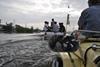
Thai floods cost $6.5bn and cripple supply chains
Continued flooding in Thailand has killed almost 400 people and is having a devastating impact on businesses and their ability to shift supplies
-
 Analysis
Bribery index reveals no improvement in UK
Britain actually performs worse than three years ago despite the implementation of the Bribery Act
-
 Analysis
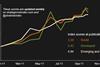
Strategic risk leaps 5% this year
Instability in the Arab world is affecting the strategic risk exposures for businesses across the globe by creating instability in the energy markets and by inspiring political unrest
-
 Analysis
Oklahoma rocked by biggest quake ever
Quake is the largest ever recorded in the region but only causes slight damage and no fatalities
-
 This Week's Top Risk
A rocky road to recovery
Criticisms of Europe’s bailout fund are getting louder and fears around the state of the eurozone are increasing
-
 Analysis
Did a Harvard professor cause the economic crisis?
Could the ideology being taught at Harvard University have contributed to the poor state of the financial system and today’s widening economic inequality?
-
 Analysis
East meets West
Despite global misery, economies in Asia remain strong, making it attractive for new business. But with this come new considerations for risk managers who must rethink their strategies if they are to approach this area
-
 Analysis
Lloyd’s pauses for Armistice Day
Members of the British armed forces joined Lloyd’s underwriters to remember soldiers who have died for their country
-
 Analysis
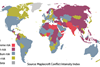
Conflict risk index
As war and conflict increasingly creep across the globe, organisations must reconsider how they do business in volatile countries and, indeed, as the situation in Libya demonstrates, just who they’re doing business with