



All Ticker Stories articles – Page 79
-
 Features
Differentiating our view of cat risk
Over estimating catastrophe risks is as bad as underestimating them, as both create additional costs. We must understand risk better than our competitors to grow, decrease costs and maximise returns. By Gero Michel
-
AIRMIC Portfolio
Claims handling index
The first draft of AIRMIC's guide for insurance buyers on evaluating insurers' claims handling performance will be ready in October for discussion at a special convention
-
 Features
The class war
Nathan Skinner tracks the latest developments in European legislation towards evolving a US-style system of collective redress
-
 Features
Essential criteria for the creation of reliable cyber insurance
If there is valuable data, you can guarantee threats to its security will not be far behind
-
 Features
Hans Gorrée and Peter A den Dekker
Two dutch risk management greats talk about what has changed in risk management over their lifetimes
-
 Features
Infrastructure deterioration
Many parts of the US infrastructure such as levees, dams, bridges and roads have deteriorated to a point that they may not withstand a catastrophe or the use to which they would be put during a disaster. By Paul Mlakar
-
Features
Risk engineering
In a competitive environment, preventing loss is vital. Nathan Skinner garners the thoughts of five risk managers on the subject
-
 Features
See no evil
Is Google as squeaky clean as its users like to think? Lee Coppack considers privacy and trust, and looks at the risks that may lie in wait for the world’s favourite search engine
-
 Features
Working towards solutions for flood
Since 1980, Europe has suffered 17 catastrophic floods that have done at least $75 billion worth of economic damage in total. Only about 25% of these losses were insured. The devastating and costly events of 2002 and 2007 have spurred searches for better planning, precautions and financial solutions. By Lee ...
-
 Features
Why flood losses are increasing
Exposure, the governing factor An almost explosive growth in the values of property in flood-prone areas and the much greater vulnerability of the things that people own are the main reasons for rising flood losses. By Wolfgang Kron
-
 Features
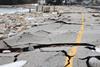
Withstanding the forces of nature
A country’s entire population cannot live in a few select locations that are not vulnerable to natural disasters, but good precautions can make any place more resilient. By Robert Morelli
-
 Features
Forgotten, but not gone?
When cases of bird flu were widespread in 2005 and 2006, the risk of a worldwide human influenza pandemic was taken as a serious threat. While the threat has not receded, European companies may have let down their guard, says Graham Buck
-
 Analysis
Present and future insurance risks
Insurance lawyers hosted a conference looking at the latest risk trends
-
 Features
More than just good PR
Operating in politically and socially volatile regions need not be a potential recipe for disaster. Mike Penrose gives some guidelines for a strategy that will benefit both your business and the local community
-
 Features
Who pays for hurricanes?
For decades residential and commercial property insurance policyholders in the United States have had a place to go if they are having difficulty obtaining coverage in the standard market. By Claire Wilkinson
-
 Catastrophe Risk
US terrorism insurance inquiry
Large, high value urban properties find it hard to find terrorism cover
-
 Features
The new risk management landscape
As risk management becomes a boardroom issue, risk managers face new challenges, say Simon Perry and Geraldine Rutter
-
 Features
The watercourse of nature
Anne-Claire Serres is an agronomist specialised in hydrology, who heads the catastrophe quantification team at Paris Re. She talks to Catastrophe Risk Management about her work. By Lee Coppack
-
 Analysis
UK’s top risks
The Cabinet Office's National Risk Register lays out the main threats to the country but offers little in the way of solutions
-