

In major infrastructure projects, the real test of risk management is not identifying threats but managing how they intersect. In this port expansion, resilience depended on building a framework that could respond as those connections shifted over time.
Developing a deep-water port meant navigating environmental scrutiny, community expectations, financial volatility and operational complexity.
For GleeYM programme and risk management consultant Yasir Masood, who served as the project’s risk lead advisor, the challenge was to understand how these issues connected and then design a risk framework capable of adapting as the project evolved.
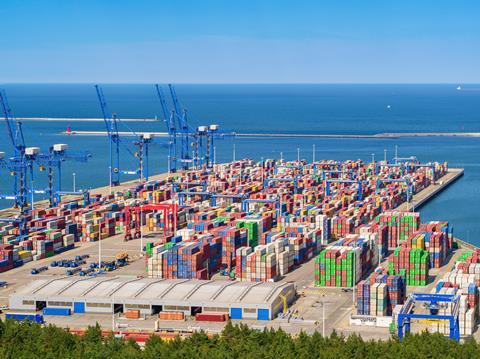
Speaking to StrategicRISK, Masood outlines how rigorous stakeholder mapping, dynamic risk planning and collaborative project governance helped keep the multi-year port development on track despite supply chain disruption, political sensitivity and strict regulatory oversight.
Understanding the risk landscape
From the outset, Masood identified and analyzed a wide range of high-severity threats. These included environmental and regulatory hurdles, like permit delays and potential legal challenges as well as financial pressures from volatile costs and potential funding gaps. Operational concerns featured prominently, such as severe weather and supply chain issues.
Stakeholder issues posed further uncertainty, including community opposition, labor disputes and shifting political priorities along with the influence of Indigenous groups, their interest and of course power plays in either direction.
To structure this complex landscape he used a whiteboard and mind-mapping system to evaluate each threat based on its likelihood and potential impact. The process allowed the team to classify the most serious exposures as priorities requiring immediate mitigation and senior oversight while others were assigned actions or placed on a watchlist. Workshops ensured the register stayed dynamic with regular reviews to adapt to new threats throughout the project’s life.
Managing diverse stakeholders
The project required engagement with residents, unions, regulators, contractors, Indigenous communities and environmental groups. Masood began by carefully mapping all groups and setting up specific communication channels.
These took several forms. He held town halls for residents, created formal working groups with regulators for early feedback and led collaborative planning sessions with contractors and unions. The client’s CSR team helped to bridge the gaps between interests.
His aim was to “move beyond a one-size-fits-all method, ensuring every group had a clear and accessible way to be heard”.
When issues emerged, such as community concerns about dredging, he facilitated mediated dialogues to find solutions such as an alternative route. Regulators were reassured through commitments that exceeded requirements. Contractors were supported through shared-risk contracts which encouraged adaptability.
The tailored communication strategy helped maintain trust and secured the project’s social licence to operate.
Handling operational and construction challenges
Several operational challenges caused significant pressure. These included “complex marine dredging in sensitive waters, where I encountered unexpected rock and strict disposal rules,” says Masood. At the same time global supply chain issues caused severe shortages of essential materials like steel. Frequent severe weather forced work stoppages and damaged unprotected infrastructure.
To manage this complexity Masood relied on advance planning. For dredging he quickly adapted using pre-planned strategies like advanced mapping and secured alternative disposal sites. For supply interruptions he activated backup suppliers and pushed to use contingency stockpiles if needed.
Weather risk was managed through a flexible schedule that adapted to weather forecasts, maximising productivity during calm periods by incorporating weather related risks using probabilistic calendars.
These responses prevented individual issues from escalating into full project-wide failures.
Embedding environmental stewardship
Environmental scrutiny was a central concern. Masood viewed environmental and compliance issues as core risks. He began by reviewing the various past and present EIA and marine life studies to understand the local ecosystem and collaborated with agencies to design measures, like closing out of all the minor recommendations well ahead of the deadline.
He proposed integrating sustainability into procurement by mandating low-carbon materials and designing infrastructure for future clean energy needs through LEED accreditation process.
He also planned a dynamic and responsive Project Information Management system (PMIS) to support environmental governance and worked with supply chain colleagues to add a clause in the contract that held contractors accountable to sustainability goals through their performance metrics.
Transparency was a key principle. Masood openly shared data with the community relations department, strengthening trust and reducing friction.
Managing financial volatility and supply chain disruption
Masood anticipated significant financial uncertainty. His first step was to create a 15% contingency fund specifically for inflation and unexpected shocks by performing Integrated Cost and Schedule Risk Analysis.
He introduced dynamic modelling to anticipate cost movement including dynamic cost modelling and the use of Monte Carlo Simulation to produce probabilistic cash flows and Probabilistic Earned Value Management (EVM).
These tools allowed the team to forecast price shifts and adjust procurement strategies before disruption materialised.
When a sharp surge in steel prices and significant shipping delays hit the project, the “contingency reserves allowed us to absorb these immediate cost spikes, beyond contingency reserve, without halting work,” he says. Using BI dashboards, the team could dynamically reschedule tasks where possible and accelerate activities unaffected by delayed materials.
Value engineering sessions were used to identify safe alternatives for certain components.
Masood maintained full transparency with stakeholders by sharing monthly financial health reports.
Lessons for future infrastructure projects
Masood’s core lesson was that “true resilience comes from integration”. He observed that financial, environmental and operational risks are deeply connected. A single supply chain issue could become “a budget and a stakeholder trust issue”.
To expose these connections he led cross-functional workshops involving everyone from engineers to community liaisons. These revealed hidden links, like how weather patterns affected both construction and wildlife.
He also used pre-mortem exercises to imagine failure which helped identify early oversights.
Transparency with risk information helped turn skeptics into collaborative partners.
As for how Masood plans to strengthen future projects, he would:
- Institutionalise integrated risk governance with permanent cross-functional teams that have real authority
- Apply Generative AI and integrate it with a fully functional excel based Monte Carlo Simulation tool to run the advanced What-if Analysis and incorporate results into your decision making. Also, perform rigorous Integrated cost and schedule Risk Analysis before going for Gate approval throughout project life cycle
- Embed resilience directly into contracts
- Treat Indigenous community and environmental groups as essential risk management partners from the very start
“We must stop treating risk as a series of isolated threats to be avoided and start seeing it as a dynamic system to be navigated where the greatest opportunities often lie in the interconnections,” Masood adds.









No comments yet